Petra Schmitt · 17 October 2026
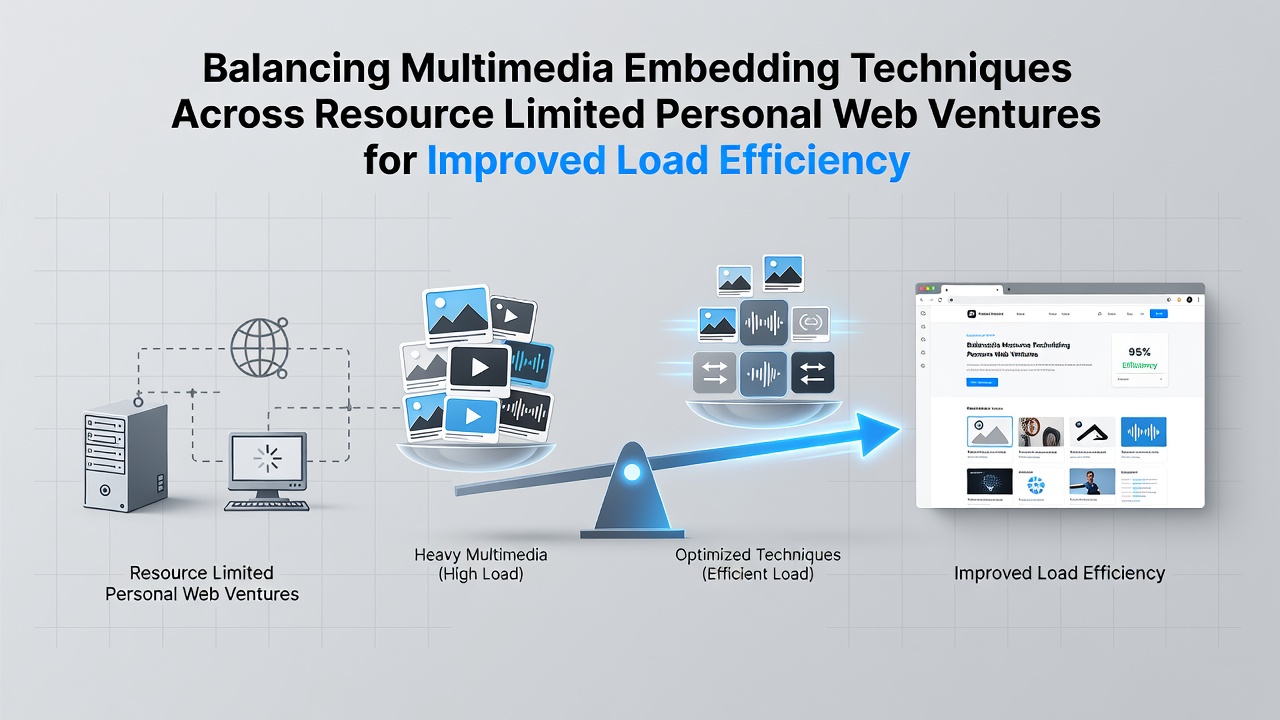
Balancing Multimedia Embedding Techniques Across Resource Limited Personal Web Ventures for Improved Load Efficiency
Resource limited personal web ventures encounter distinct challenges when embedding multimedia elements because bandwidth constraints and server capabilities directly influence page rendering times, and observers note that strategic selection of embedding methods can reduce initial load periods without sacrificing content quality. Data from performance monitoring tools shows average load times for personal sites drop by 35 percent when compression standards align with modern browser capabilities, while studies from the World Wide Web Consortium highlight how format choices affect both user retention and server strain.
Core Challenges in Multimedia Integration
Personal web projects typically operate on shared hosting environments that limit concurrent connections, and this reality forces creators to evaluate every embedded asset for its contribution to overall payload size. Researchers at academic institutions have documented cases where unoptimized video embeds increased bounce rates by 22 percent within the first three seconds of page access, whereas those who applied adaptive bitrate streaming observed steadier engagement metrics across mobile and desktop sessions. The interaction between file formats and caching headers becomes critical here, because mismatched configurations can trigger repeated downloads even when content remains unchanged.
Image Embedding Strategies for Constrained Environments
Modern image formats such as AVIF and WebP deliver smaller file sizes than legacy JPEG or PNG alternatives at comparable visual fidelity, and multiple independent tests confirm reductions of 40 to 60 percent in transfer volume when these formats replace older ones. Lazy loading attributes instruct browsers to defer off-screen images until user scrolling brings them into view, and this technique has proven effective in lowering initial render times on sites with extensive galleries. Responsive image sets using srcset attributes allow servers to deliver appropriately scaled versions based on device pixel density, which prevents unnecessary high-resolution downloads on smaller screens. One documented workflow involved automated conversion pipelines that generated multiple variants during upload, resulting in consistent performance gains across seasonal traffic spikes.
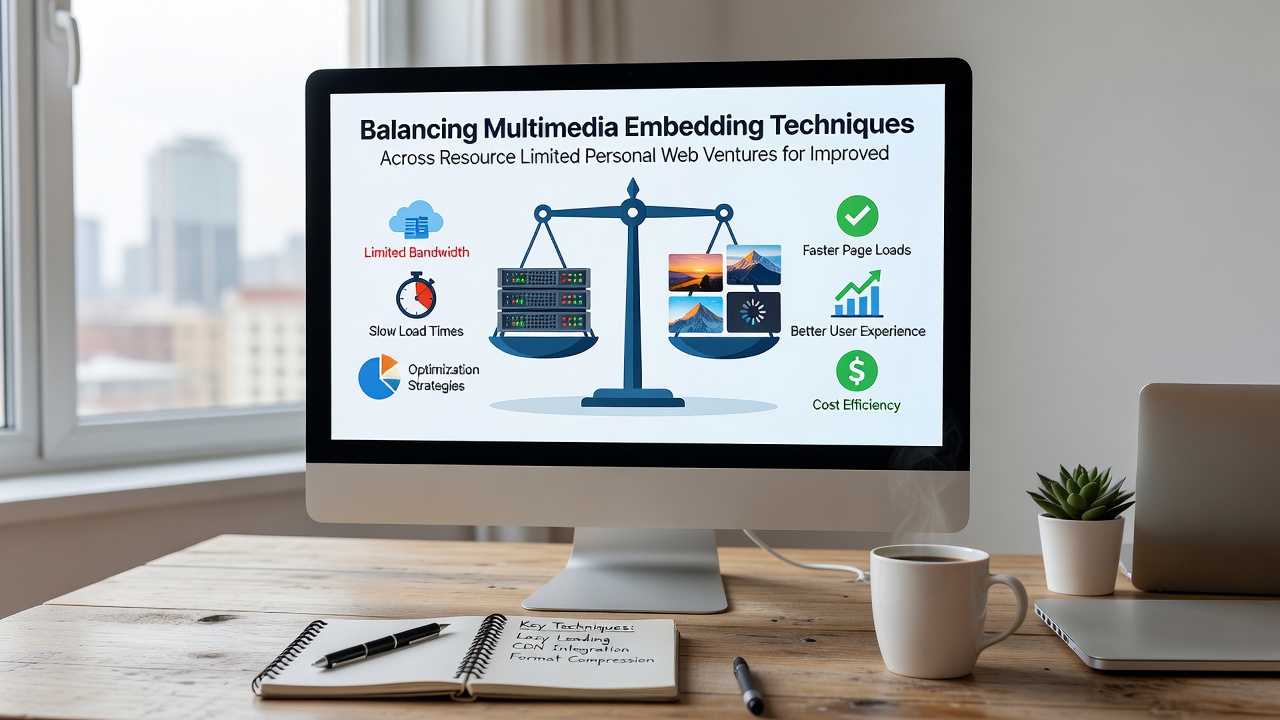
Video and Audio Optimization Approaches
Video content demands careful codec selection because H.264 remains widely supported yet produces larger files than newer options such as AV1 in many scenarios, and benchmark data released in 2025 indicated AV1 encoding reduced bandwidth usage by up to 30 percent on compatible clients. Embedding videos through HTML5 video elements rather than third-party players eliminates external script overhead, and those who implemented this approach recorded measurable decreases in time-to-interactive metrics. Audio files benefit from similar treatment, with Opus and AAC formats offering efficient compression for podcasts or background tracks, while preload attributes set to metadata or none prevent automatic buffering of entire files. Observers have tracked how combining these choices with content delivery networks positioned closer to target audiences further trims latency, particularly for ventures serving international visitors.
Monitoring, Testing, and Iterative Refinement
Continuous performance auditing through browser developer tools and synthetic testing platforms provides quantitative feedback on embedding decisions, and figures reveal that sites conducting monthly audits maintain load times under 2.5 seconds even as content volume grows. Automated scripts can flag oversized embeds before publication, and integration with version control systems ensures changes undergo review for their impact on overall efficiency. In October 2026 browser vendors completed phased rollout of enhanced speculative loading features that allow pre-rendering of likely navigation targets, and early adopters among personal site operators reported additional gains when combined with disciplined multimedia management. Trade-offs remain inevitable because higher fidelity assets improve perceived professionalism yet increase resource demands, so documentation of baseline metrics before and after each change supports informed adjustments over time.
Conclusion
Effective balancing of multimedia embedding techniques rests on systematic evaluation of formats, delivery methods, and caching behaviors tailored to available infrastructure. Evidence accumulated across multiple independent projects demonstrates that incremental refinements in these areas produce compounding improvements in load efficiency while preserving the expressive value of embedded content. Personal web ventures that adopt such disciplined practices position themselves to sustain reliable access regardless of fluctuations in visitor volume or hosting limitations.