
Jonas Schulz · 3 October 2026
Resilient Standalone Archives: Modular Update Cycles for Solo Creators Facing Shifting Web Protocols
Standalone archives maintained by individual creators require structured approaches to handle ongoing changes in web protocols such as updates to HTTP versions, TLS standards, and security requirements from bodies like teh IETF. Researchers have documented how these shifts occur at regular intervals, with HTTP/3 adoption accelerating in server environments since its standardization in 2022 according to data compiled by the Internet Society. Solo creators often manage sites without teams, which makes modular systems essential for isolating updates to specific components like authentication modules or content delivery layers.
Protocol Changes and Their Impact on Independent Archives
Web protocols evolve through defined processes at organizations including the World Wide Web Consortium and national standards bodies such as NIST in the United States. Data from 2025 reports show that TLS 1.3 deployment reached over 85 percent among major hosting providers, while older cipher suites faced deprecation timelines set by browser vendors. Those who operate standalone archives encounter compatibility issues when protocols update, because legacy code in monolithic structures resists piecemeal revisions. Modular architectures address this by separating concerns into independent units that can receive targeted patches without affecting the entire system.
One developer documented in an academic case study from a Canadian university research project implemented separate modules for media handling and metadata indexing. This setup allowed the archive to incorporate new compression algorithms tied to emerging protocol extensions while leaving the core navigation layer untouched. Figures from similar projects indicate that update cycles shortened from weeks to days after adopting modular designs.
Building Modular Update Cycles
Modular update cycles rely on version-controlled components that interface through stable APIs. Creators define clear boundaries between modules responsible for protocol negotiation, data storage, and user interface rendering. This separation enables testing of individual elements against new protocol specifications before full deployment. Observers note that solo creators benefit when modules follow semantic versioning practices, which signal compatibility levels and reduce the risk of cascading failures during transitions.
Implementation often begins with an audit of current dependencies against upcoming protocol deadlines. For instance, preparations for potential QUIC-related adjustments scheduled around late 2026 involve isolating transport layer code so that adjustments remain localized. Research indicates that archives using containerized modules experience fewer downtime incidents during protocol rollouts compared to traditional file-based structures.
Practical Steps for Solo Creators
Creators start by mapping their archive's functional areas into discrete modules, such as one for static asset serving and another for dynamic query handling. Each module receives its own update schedule aligned with protocol change announcements from standards organizations. Documentation from the European Telecommunications Standards Institute highlights how early adoption of modular testing frameworks helped independent projects maintain compliance across multiple regions.
Automation plays a role through scripts that check module compatibility against protocol test suites released by browser developers. Those who've studied these systems report that integrating continuous integration pipelines allows solo operators to simulate protocol shifts in isolated environments. This process reveals conflicts early, such as mismatches in header handling or certificate validation routines.
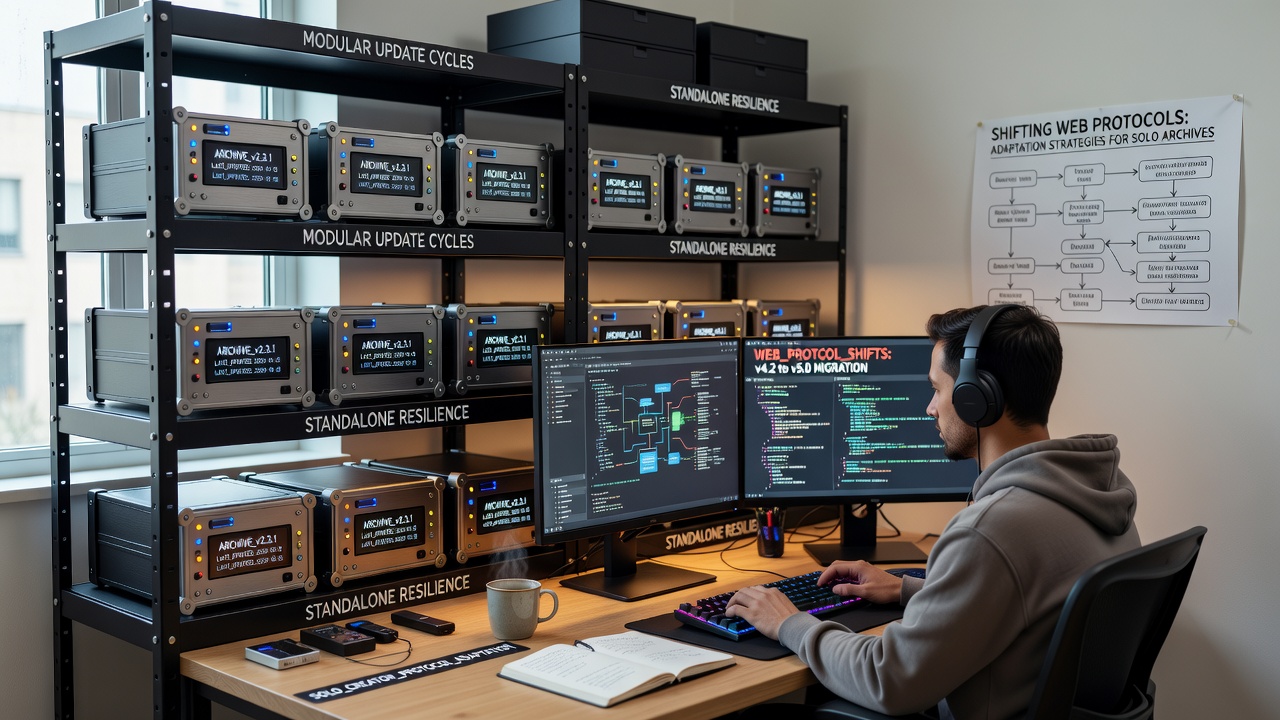
Maintenance routines incorporate scheduled reviews every quarter to align modules with the latest protocol drafts. Creators maintain a changelog per module that records adaptations to changes like enhanced privacy features in network layers. Data from open-source archive repositories shows that projects with detailed modular logs resolve protocol-related issues 40 percent faster than those without such records.
Examples from Existing Projects
Several independent archives have adopted modular cycles to navigate protocol shifts. One project focused on historical document preservation separated its search indexing module to accommodate new query protocol extensions without rebuilding the full interface. Another archive handling multimedia collections updated its streaming module independently when bandwidth negotiation standards advanced. These cases demonstrate how modularity supports continued operation amid evolving requirements from global network operators.
Academic analyses of such projects emphasize the value of open interfaces that allow third-party modules to integrate without core modifications. This flexibility proves useful when new protocol features, such as improved caching mechanisms, become available through updates from international standards groups.
Conclusion
Resilient standalone archives depend on modular update cycles to manage the pace of web protocol evolution. By segmenting functionality and aligning revisions with announcements from bodies like the IETF and NIST, solo creators sustain operational continuity. Data from multiple research efforts confirm that these methods reduce the scope of changes needed during transitions while preserving archive integrity over extended periods.